Highlights
- Refrigerators, ranges, washers, and dryers are heavy enough to crack, chip, or scratch kitchen tile in a single careless move.
- Most floor damage happens in the first few feet, when an appliance is pulled out of its space and dragged across the floor.
- Professional crews use floor runners, sliders, and appliance dollies to protect tile from start to finish.
- Preparing appliances ahead of time, like emptying and defrosting the refrigerator, makes moving day faster and safer.
- Ranges should be reinstalled with their anti-tip brackets properly engaged at the new home.
- Dependable Movers SF handles heavy appliances with care across San Francisco’s stairs, hills, and tight kitchens.
Kitchen tile is durable, but it has limits. Ceramic and porcelain can crack under concentrated weight, glazed surfaces scratch easily, and natural stone like marble or travertine can chip at the edges. A refrigerator that weighs a few hundred pounds, dragged even a short distance, can leave damage that costs far more to fix than the move itself.
That risk shows up in millions of homes every year. According to Mercatus.org, there were 33.9 million interstate moves during the five-year period from 2018 to 2023, and countless more moves happen within the same city. Each one involves at least a few heavy appliances that need to come out of tight spaces without harming the floors around them.
In San Francisco, the challenge often grows. Older buildings, narrow kitchens, steep front steps, and shared stairwells leave little room for error. Below, we’ll walk through how professional local moving companies protect kitchen tile when moving heavy appliances and what you can do beforehand to make the process smoother.
Why Appliances Damage Tile So Easily
Most appliances aren’t designed to be moved often. Their weight rests on small feet, leveling legs, or wheels meant only for minor adjustments. When an appliance is pulled or pushed across tile, all that weight concentrates on a few tiny contact points.
Those points can gouge glazed surfaces, catch on raised tile edges, and crack tiles that sit over uneven subfloor. Grit trapped under a leveling leg acts like sandpaper, leaving long scratches as the appliance moves. Tall appliances like refrigerators can also tip if they catch on a grout line, which puts both the floor and nearby cabinets at risk.
The first few feet are usually where damage happens. Pulling an appliance out of its cutout, especially in a snug built-in space, is when most scrapes and cracks occur. That’s why professional crews focus so much of their preparation on this moment.
How Do Professional Movers Protect Kitchen Floors?
Protection starts before anything moves. Experienced crews lay down floor runners, hardboard sheets, or heavy-duty protective panels along the entire path, from the kitchen to the exit. These layers spread weight more evenly and keep grit and wheels off the tile.
To get an appliance out of its space, movers often use furniture sliders or low-friction pads placed under the feet, allowing it to glide rather than scrape. Some crews use appliance rollers or small platform dollies that lift the unit slightly so no part of it touches the tile directly.
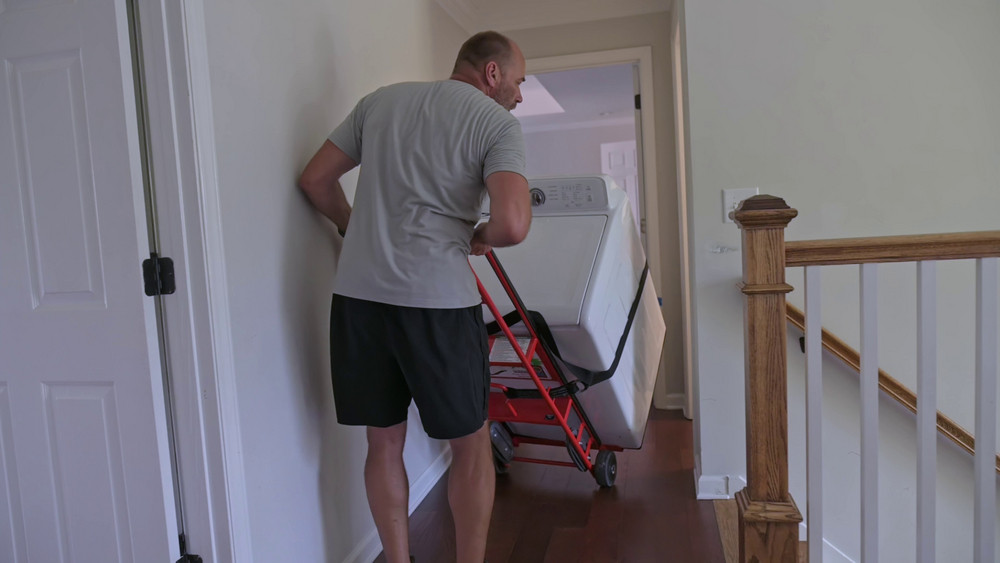
Once the appliance is out, a specialized appliance dolly takes over. These dollies have straps to secure the unit, a tall frame for stability, and often stair-climbing features for multi-level homes. The appliance is tilted carefully onto the dolly, strapped in place, and rolled along the protected path.
Door jambs, cabinet corners, and walls get padding, too. Many local moving companies also wrap the appliance itself in moving blankets to prevent scratches to its finish and to anything it passes.
Preparing Your Appliances Before Moving Day
A little preparation makes the move faster and reduces the risk of leaks or damage.
Refrigerators should be emptied, and freezers defrosted, ideally a day before the move. Melting ice can drip onto floors and create slippery conditions, while standing water in the drip pan can spill during transport. Remove loose shelves and drawers or secure them so they don’t shift. If your refrigerator has a water line for an ice maker or dispenser, plan to have it shut off and disconnected properly.
Washers and dryers need attention as well. Front-load washers often require shipping bolts to protect the drum, and water hoses should be drained. Gas appliances, including gas dryers and ranges, should be disconnected by a qualified professional, since improper disconnection can create serious safety hazards.
Clear the path through your home ahead of time. Remove rugs that could bunch up, move furniture out of the way, and let the crew know about any tight turns, low doorways, or steps. The more your movers know in advance, the better they can plan equipment and approach.
Reinstalling Ranges Safely at Your New Home
Moving a range involves one safety step that’s easy to overlook: the anti-tip bracket. This small metal bracket anchors the range to the wall or floor so it can’t tip forward when weight is placed on an open oven door.
According to the U.S. Consumer Product Safety Commission, voluntary safety standards require manufacturers to supply anti-tip brackets with new gas and electric ranges, and an installed bracket should hold the range securely in place. When a range moves to a new home, that bracket needs to be installed in the new location and properly engaged.
This matters most in homes with young children or older adults, since a child climbing on an open oven door or an adult leaning on it for support can cause an unsecured range to tip. Ask your moving crew or appliance installer to confirm the bracket is in place before the range is put back into use.
San Francisco Challenges That Call for Experience
Moving heavy appliances in San Francisco comes with challenges that don’t exist in many other cities. Victorian and Edwardian homes often have narrow hallways, steep interior staircases, and small kitchens with little room to maneuver. Many flats have exterior stairs from the sidewalk, and some buildings have small or shared elevators that need to be reserved.
Experienced local moving companies know how to work within these constraints. They bring the right equipment for stair carries, plan routes that protect floors and walls throughout the building, and handle appliances carefully from the kitchen all the way to the truck. That local know-how is what keeps both your belongings and your property in good condition.
Move Your Appliances Safely With Dependable Movers SF
Heavy appliances and kitchen tile don’t mix well without careful planning. Protecting floors with runners and sliders, using proper appliance dollies, preparing units ahead of time, and reinstalling ranges with their anti-tip brackets all help ensure a smooth move without cracked or scratched tile. In a city with tight spaces and steep stairs, experience makes all the difference.
At Dependable Movers SF, our team moves refrigerators, ranges, washers, dryers, and more with the equipment and care they require. We protect your floors, walls, and doorways at both homes and handle the challenges of San Francisco buildings every day. If your move includes heavy appliances, reach out to us today and let one of the most trusted local moving companies in the area handle the heavy lifting.
Frequently Asked Questions
How do movers keep appliances from scratching tile floors?
Professional movers use floor runners or protective panels, furniture sliders under appliance feet, and specialized appliance dollies so heavy units never drag directly across tile.
Should I empty and defrost my refrigerator before moving?
Yes. Empty the refrigerator and defrost the freezer ahead of time to prevent leaks, reduce weight, and keep floors dry and safe during the move.
Does Dependable Movers SF move appliances up and down stairs?
Yes. Our crews use stair-climbing appliance dollies and proper techniques to move heavy appliances safely through San Francisco’s stairways, hallways, and elevators.